 Boujee Kids
In this review or guide
The Stapelstein pitch takes some nerve: a single play stone for £30.95 at the time of writing, and the promise that your child will do more with it than with a toy box full of things that cost half as much. This review takes that promise seriously, and sceptically, before telling you which of the four ways in is actually worth your money.
How we chose
This edit is research-led: it draws on verified owner reviews, retailer specifications and editorial research, not our own testing. Links are affiliate links; we may earn a commission at no cost to you, and it never changes a verdict.
What exactly is a Stapelstein, and why is one stone £30.95?
Strip away the Instagram playrooms and a Stapelstein is a light, dome shaped stone that a child can step on, stack, sit in, spin, fill, tip over a head as a hat or press into service as a soup bowl for a teddy. That is the whole product. There is no screen, no sound module, no instructions worth mentioning. The retailer describes the range as innovative, award winning and truly multi-functional, and the honest translation is that the stone does nothing at all until a child decides what it is. That is either the entire appeal or the entire problem, depending on your child.
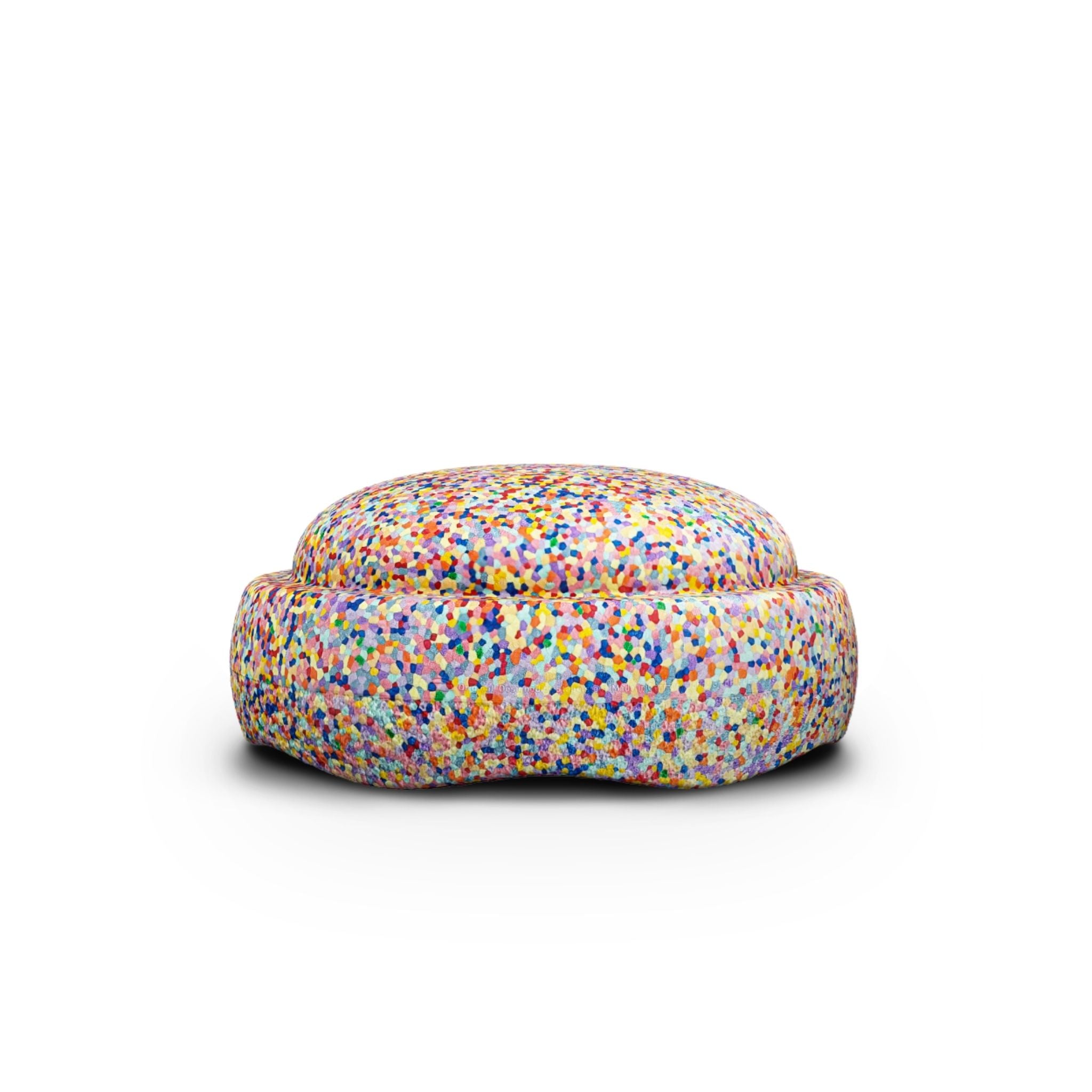
So why the price of a decent board game for one piece of plastic? Stapelstein began as a German design project, and the stones are still made in Germany rather than outsourced to the cheapest factory available. They are formed from expanded polypropylene, a foamed material that keeps each stone light enough for a toddler to carry while standing up to being jumped on. You are paying for engineering and origin, not for features. The Super Confetti stone below is the cheapest way to find out whether your household is a Stapelstein household, and for the first time it puts all twelve of the range’s rainbow colours into one confetti patterned stone. As a taster it works. As a complete answer it does not, because one stone caps what a child can build, and the maths of the sets, which we will get to, quietly punishes buying stones one at a time.
STAPELSTEIN · STEPPING STONES
Stapelstein Stepping Stone – Super Confetti
One stone, all twelve of the range’s colours in a confetti design. The lowest risk way to test whether open-ended play lands in your house.
See at The Kid CollectiveThe Greens 2+1 set: the Stapelstein sweet spot
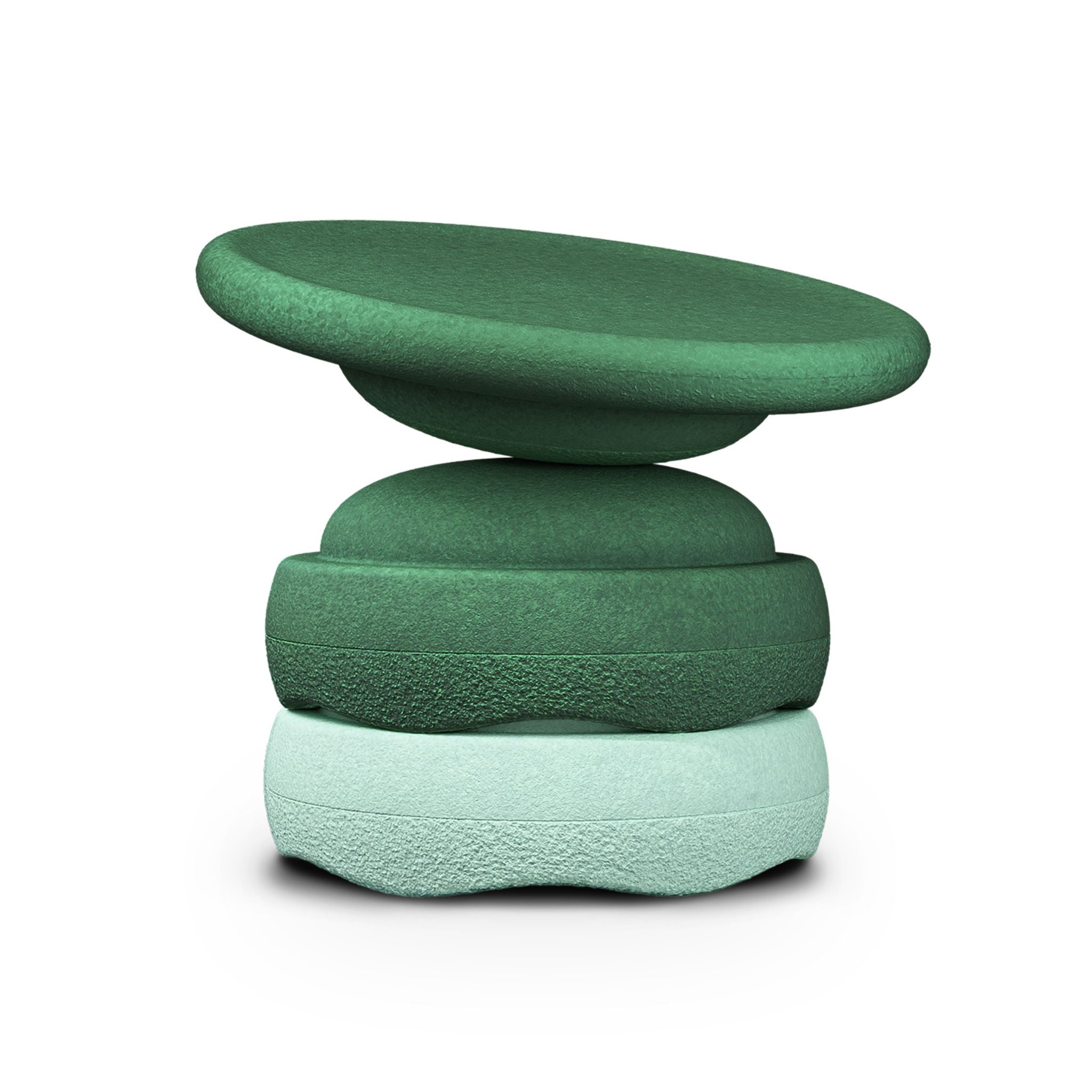
If you are only going to read one verdict in this Stapelstein review, make it this one. The Greens set is where the range starts making sense. Its 2+1 format pairs two stepping stones in calming green shades with a balance board, which is the minimum kit for the play the brand is actually famous for: stepping from stone to stone, building a small tower, rocking on the board, then rearranging the lot into something else entirely. The retailer’s line about blending invigorating vitality with grounding calm is catalogue poetry, but the underlying point is fair. Two stones and a board give a child choices, and choices are what keep this sort of toy off the shelf of regret.
The money argument is just as clear. At £87.95 the Greens set works out around £29 per piece, against £30.95 for a lone stone, so you are effectively getting the third piece’s discount for committing early. Buying a single stone now and topping up later is the more cautious route, but it is also the more expensive one per piece. For most families weighing up a first Stapelstein purchase, this is the answer.
STAPELSTEIN · STEPPING STONES
Stapelstein Stepping Stones – Greens 2+1 Set
Two stepping stones in nature inspired greens plus a balance board. The set that unlocks stepping, stacking and balancing without full set money.
See at The Kid CollectiveThe wobble board: the add-on that earns its keep
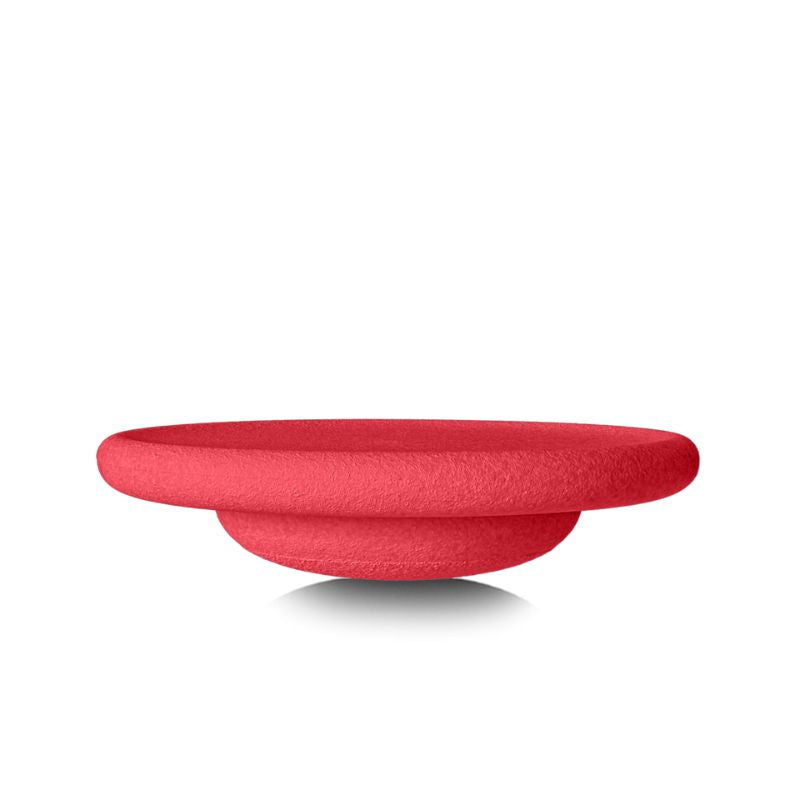
The wobble board is the piece people underestimate. On its own it is a shallow curved board in a vibrant red; combined with stones it becomes a rocker, a bridge, a roof, a lid and the top of whatever tower is currently under construction. The retailer positions it plainly as an addition, perfect for topping up existing sets, and that is exactly how to treat it. It is not the place to start, because a board without stones is a much smaller idea than stones without a board.
At £34.95 it costs slightly more than a single stone, which feels the wrong way round until you watch how much of the range’s balancing play routes through it. Our advice: if you already own the Greens set and want one more piece rather than another full set, this is the piece. If your child gravitates to the rocking and balancing side of play more than the stacking side, it might even jump the queue ahead of a third stone.
STAPELSTEIN · BALANCE BOARDS
Stapelstein Wobble Board – Red
A single balance board in bold red, built to top up an existing set. The multiplier piece, not the starting point.
See at The Kid CollectiveThe Pastel 6+1 set: full commitment Stapelstein
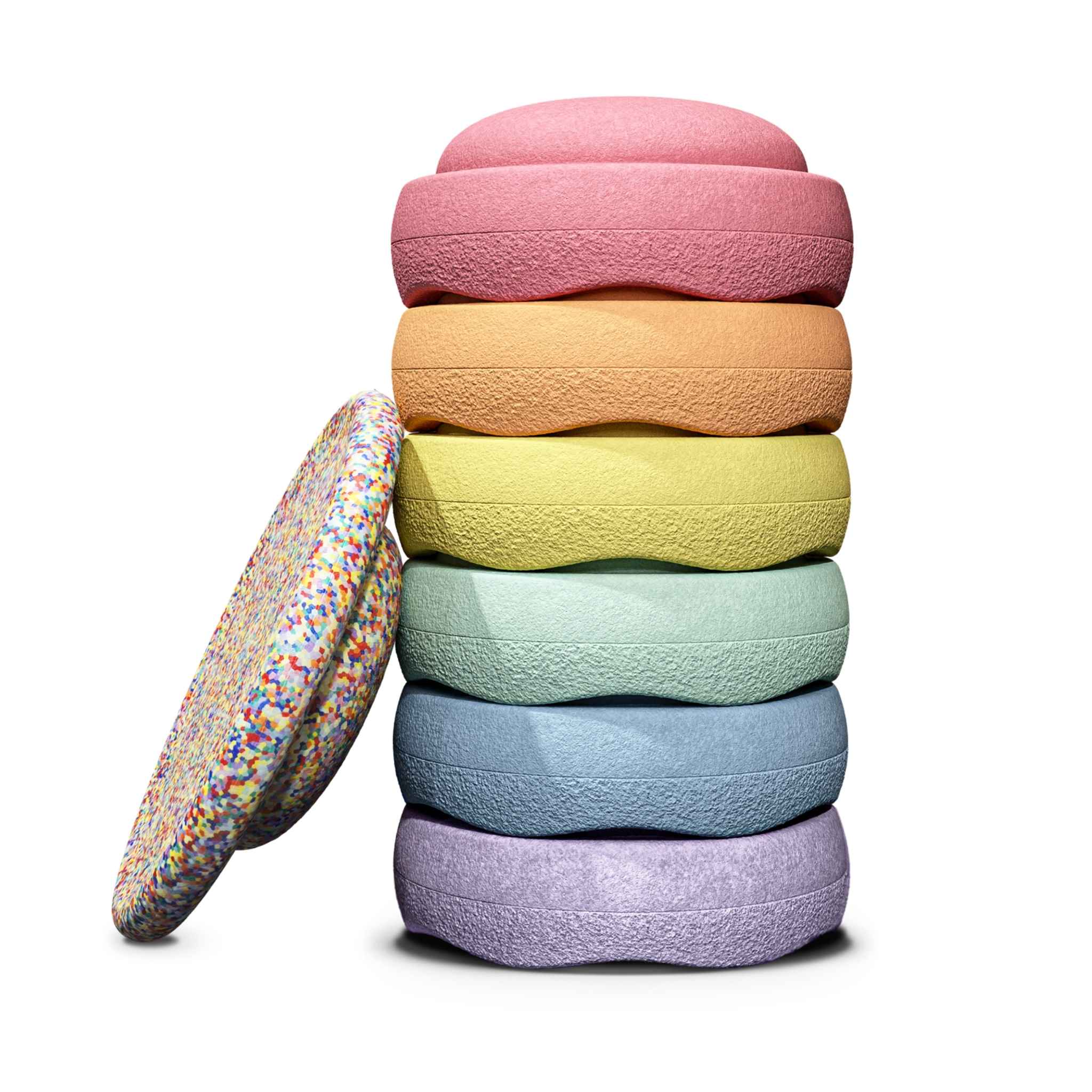
The Pastel 6+1 bundle is the deep end: six stepping stones plus a balance board in a confetti design, for £184.95. That number will make most sensible people flinch, and it should. It is more than many families spend on a bike. But judged per piece it is actually the cheapest way to buy Stapelstein, at roughly £26 a piece against £30.95 for a solo stone, and six stones is where the toy changes character. Paths get long enough to feel like obstacle courses, towers get tall enough to matter, and two children can build at once without a diplomatic incident.
The retailer calls it a set that will be played with day after day, and with the right child that is plausible, because open-ended kit tends to scale with imagination rather than age. Our sceptic’s caveat stands, though: £184.95 is only good value if the play actually happens. Buy this as a first purchase only if you already know your child loses hours to building, balancing and pretending. If you are guessing, start with the Greens set and let the evidence arrive before the outlay does.
STAPELSTEIN · STEPPING STONES
Stapelstein Stepping Stones – Pastel 6+1 Set
Six stones and a confetti balance board. The best per piece price in the range, for households already sold on the idea.
See at The Kid CollectiveStapelstein sets compared
Swipe or scroll sideways to compare. With a keyboard, focus the table and use the left and right arrow keys.
| Pick | Price | Best for | What you get |
|---|---|---|---|
| Stepping Stone, Super Confetti | £30.95 | Testing the water | One stone with all twelve range colours in a confetti design |
| Greens 2+1 Set | £87.95 | First proper purchase | Two green stepping stones plus a balance board |
| Wobble Board, Red | £34.95 | Topping up a set | One red balance board |
| Pastel 6+1 Set | £184.95 | Committed households | Six stones and a confetti balance board, the lowest cost per piece |
Who should buy Stapelstein, and who should skip it
Buy if: your child already turns cushions into islands and cardboard boxes into spaceships, because Stapelstein is fuel for exactly that engine. Buy if you want one purchase that covers gross motor play, construction and pretend play rather than three separate toys. Buy if you are the sort of household that keeps toys for years and passes them on, since a stone with no moving parts has very little that can break, and the sets hold their appeal as children grow into new uses for them.
Skip if: your child prefers toys with a job, characters, sounds or a clear goal, because a stone that does nothing until imagined into life will simply do nothing. Skip if the budget is tight; there are far cheaper stepping and balance toys that deliver a good share of the physical benefit, even if they lack the stacking versatility and the design pedigree. And skip the big set if you have never owned a single piece. £184.95 is a confident bet to place on an unproven habit, and the whole point of the range’s smaller entry points is that you do not have to.
Your questions, answered
What age are Stapelstein stones for?
The stones are listed as suitable from toddlerhood, around 12 months, with no meaningful upper limit for play. In practice the age question matters less than with most toys, because the stone does not dictate the game. A two year old steps and carries, a five year old builds courses and castles, and the product itself never expires the way character toys do.
Are Stapelstein stones worth the money?
Worth it for the right child, and not for every child. If your household already leans into open-ended play, the cost per hour of use can end up embarrassingly low, and the sets bring the per piece price down to around £26. If your child needs a toy to entertain them rather than the other way round, no amount of German design will change that, and your money is better spent elsewhere.
How many Stapelstein stones do you need?
One is a taster, not a toy collection. The play most people buy Stapelstein for really begins with the Greens 2+1 set, two stones and a balance board, which is enough for stepping, stacking and balancing games. Go to six stones with the Pastel 6+1 set only once the smaller set has proven itself in daily use.
Should I buy the wobble board or another stone first?
If you already own stones, the board, since it adds rocking, bridging and balancing that stones alone cannot offer, and the retailer positions it precisely as the piece for topping up sets. If you own nothing yet, start with stones; a board without stones is the less versatile half of the partnership.
Our verdict, then: Stapelstein earns its reputation but not everyone’s money. Start with the Greens 2+1 set if you are serious, the Super Confetti stone if you are curious, and walk away without guilt if your child’s play runs on stories rather than structures. If open-ended movement play is the goal, the stones sit happily alongside the picks in our best outdoor toys for kids this summer, and families building a whole ecosystem of imagination led toys should read our Le Toy Van edit next. Buying for a baby and wondering which premium names actually deserve the reputation? Our top 10 baby brands in the UK for 2026 is the wider map.