 Boujee Kids
In this review or guide
Every parent who decides to cut screen time ends up at the same crossroads: Yoto or Toniebox. Both promise stories without screens, and both will cost you considerably more than the price on the box. Here is how they actually compare, and which one deserves your money.
The quick verdict
For children aged three and over: Yoto Player (3rd Generation) is our editorial pick for free listening and a library that reaches into the school years. For ages one or two: consider Toniebox 2 instead, checking the age label on each character and game. For travel or a smaller initial budget: the Yoto Mini uses the same card library and is also for ages three and over.
Yoto safety: neither Yoto Player nor Yoto Mini is suitable for children under three. Adult supervision does not override the manufacturer’s age warning.
Yoto Player: check retailer price
Toniebox 2 Paw Patrol bundle: check price
These are affiliate links to The Kid Collective; we may earn a commission at no extra cost to you. Price figures below are illustrative figures retained from the original comparison, not live quotes. Check the retailer for the exact bundle, price and availability.
Evidence and limits
This is a research-led comparison, not our own hands-on test. An inspectable owner-review sample is not provided here, so the verdict is editorial judgment, not a measured test result. We may earn a commission from either retailer link; we do not claim the amount is identical.
Safety source checked 13 September 2026: Yoto’s product-safety guidance. It specifies ages three and over for Player and Mini, with charging handled by adults and chargers kept out of children’s reach. The age of an audio story is not the safe handling age of the device. Prices and the rest of the catalogue need a separate current retailer check before treating this as a live shopping list.
Yoto Player (3rd Generation): the storyteller that grows with them
The Yoto Player (3rd Generation) is a £100 screen-free audio player built around physical cards: slot one in and the story plays. This generation has acoustically engineered stereo speakers, a pixel display, a seven-colour nightlight, a room thermometer and an ok-to-wake clock for sleep training. It stores 600 hours of audio, doubles as a Bluetooth speaker, and works with both wired 3.5mm headphones and wireless ones. Parents manage the whole thing through the free Yoto app.
Two things stand out. The first is the free content: the player comes packed with podcasts, radio and sleep sounds, so it earns its keep between card purchases. The second is range. Yoto Player and Mini are not suitable for children under three. The card library includes audio aimed at younger listeners, but that does not make the device safe for them to handle.
In the box: the player, a 1.5m USB-A to USB-C charging cable, and a Welcome Card that doubles as a Make Your Own card. If £100 stings, the Yoto Mini (£60) plays the same cards and the same free radio, with a stated 14-hour battery.
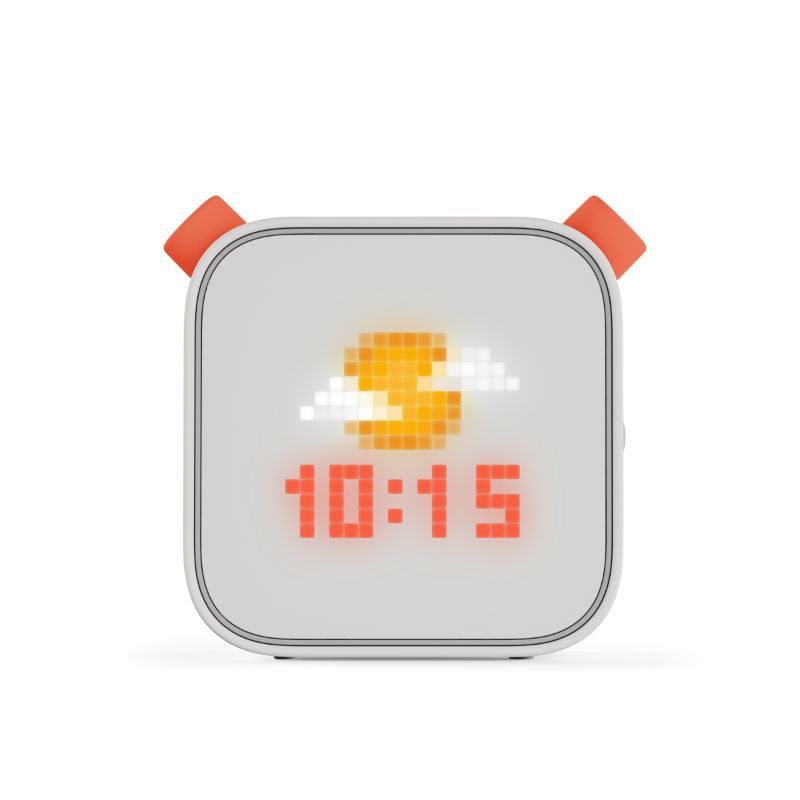
Yoto · Screen-free audio player
Yoto Player (3rd Generation)
Stereo speakers, pixel display, nightlight, ok-to-wake clock and 600 hours of storage, plus free radio, podcasts and sleep sounds. For children aged three and over; the age of an audio title does not change the device safety warning.
Check price at The Kid CollectiveToniebox 2: the toddler-proof favourite
The Toniebox 2 takes the opposite approach: a soft, squishy, padded cube designed to be grabbed, carried and occasionally dropped by very small children, with a pair of ears on top for controls. Place a Tonie character on the box, it attaches magnetically, and the story starts. Tonies pitches the Toniebox 2 at ages one to nine, and that lower starting age is the honest heart of its appeal.
The second-generation box adds an interactive light ring, a sleep timer, a wake-up alarm and USB-C charging, plus Tonieplay, a system of interactive games that only works on the Toniebox 2. The £129.95 play set stocked at The Kid Collective includes the Moon Grey box, a Paw Patrol Chase Tonie carrying four stories and over 50 minutes of audio, and the Adventure Bay Rescue Heroes Tonieplay game with its controller. If Paw Patrol is not your household’s thing, the plain starter set costs £109.95 and comes with a Creative Tonie you can load with your own recordings.
The figures are the point: children treat them as small toys as much as story keys, and collecting them could become a hobby in itself. That is charming, and, as we will get to, expensive.
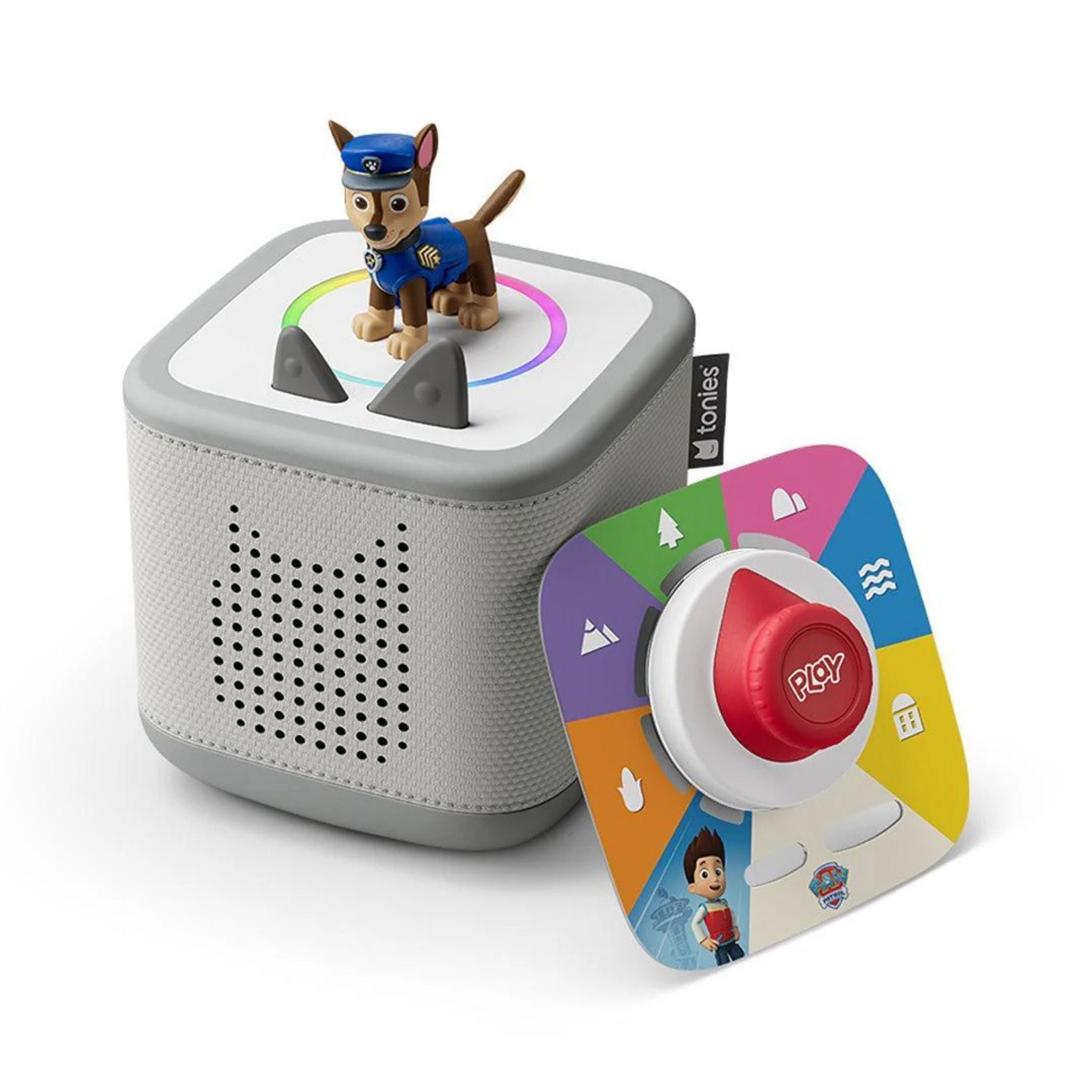
Tonies · Screen-free audio player
Toniebox 2 Play Set (Paw Patrol Chase)
Squishy, drop-friendly box for ages one to nine, with light ring, sleep timer and wake-up alarm. This set includes the Chase Tonie with four stories and the Tonieplay game with controller.
Check price at The Kid CollectiveYoto vs Toniebox 2: the comparison table
Swipe or scroll sideways to compare. With a keyboard, focus the table and use the left and right arrow keys.
| What matters | Yoto Player (3rd Gen) | Toniebox 2 |
|---|---|---|
| Price of the player | £100, or £60 for the Yoto Mini | £129.95 as the Paw Patrol play set, £109.95 as the starter set |
| Illustrative content prices, not equivalent units | Single cards £7.95 to £9.95; multi-title sets can reduce cost per title | £14.95 per character, £8.95 for Pocket Books; one character can contain multiple stories |
| Free content | Better. Free radio, podcasts and sleep sounds built in | Limited. Free downloads need a Creative Tonie |
| Content library breadth | Broader. Phonics to The Famous Five, birth to twelve | Strong for younger children, figures double as toys |
| Toddler-proofness | Good. Sturdy, with simple tactile controls | Better. Squishy padded body, ears for controls |
| Age range it stays useful | Officially three plus, content to age twelve | Officially one to nine |
| Battery | Yoto Mini states 14 hours; the full-size Player suits around-the-home listening | Long-lasting rechargeable with USB-C charging; the retailer lists no hours figure |
| Portability | Better. The Mini is pocketable and cards weigh almost nothing | Good, though the figures are bulkier to pack |
| Parental controls | Free Yoto app controls the player and content | Tonies app manages playback |
Ongoing cost: what a story actually costs you
This is the comparison that matters most, because you will spend more on content than on the player.
At The Kid Collective, single Yoto cards run from £5.95 for short meditation titles to £7.95 and £9.95 for most story cards: The Gruffalo is £7.95, A Bear Called Paddington £9.95. The sets are where the value lives. The Zog and Friends Collection is £24.95 for six full Julia Donaldson audiobooks, which works out at just over £4 a story. Tonies characters, by contrast, are typically £14.95 each, with the slimmer Pocket Books at £8.95 offering a cheaper route into some titles.
Compare the actual titles your child wants, not the number of cards or figures. One Tonie can contain several stories, and a Yoto card may contain one title or a collection. The sample card and character prices above suggest different entry costs, but they do not establish a like-for-like cost per story or per listening hour. Yoto also offers Make Your Own cards for audio you already have the right to use. Our preference for its free listening is an editorial choice, not proof that every family will spend less.
Content: library breadth and free listening
Both catalogues are genuinely good, and the big licences overlap: Julia Donaldson, Roald Dahl, Disney, Paw Patrol and Peppa Pig appear on both sides. Beyond the overlap, the shapes differ. Yoto’s range leans educational and long-form, taking in phonics card sets, the BBC Earth collection, Beatrix Potter’s complete tales and full-length novels such as Matilda and The Famous Five. Tonies’ range leans younger and more character-led, from Ms Rachel and Bing to My First Tonies sets designed for the smallest listeners, and the Toniebox 2 adds Tonieplay interactive games, which are a genuine novelty no Yoto offers.
The decisive difference is what happens when you are not buying. The Yoto ships packed with free podcasts, radio and sleep sounds, so the player is never silent between purchases. On the Tonies side, free downloads run through a Creative Tonie, which is included with the starter set but not with the Paw Patrol play set. Free daily listening is the main reason for our editorial preference. Winner: Yoto, because the free radio and podcasts mean the player earns its keep every day, bought content or not.
Age range: which one stays relevant longer
Tonies designs the Toniebox 2 for ages one to nine, and its physical controls may appeal to younger children. This is an editorial view of the design, not our own durability or child-use test; follow the manufacturer’s supervision and accessory guidance. Yoto Player and Mini are not suitable for children under three because of small parts and a long cord. Adult supervision does not override that warning.
The later years reverse the picture. A Toniebox with a Gruffalo figure on top reads as a toddler’s object, and the catalogue thins out as chapter books take over. Yoto’s library runs to age twelve, with Roald Dahl, Enid Blyton and full novels sitting naturally alongside the preschool titles, and the player’s clock, nightlight, radio and Bluetooth speaker mode keep it on the bedside table. Buying for ages one or two, we would consider Toniebox 2. For ages three and over, our preference is Yoto’s school-age catalogue; how long either stays interesting depends on the child.
The pricing breakdown: what year one really costs
These are illustrative baskets using the price figures already in this comparison. They are not current quotes or equivalent quantities of stories: the Toniebox basket also includes a game, and characters can contain multiple stories.
- Yoto Player route, about £160: player £100, the Zog and Friends six-story set £24.95, plus four single cards at £7.95 to £9.95, roughly £36. Ten stories, plus the free radio, podcasts and sleep sounds on top.
- Yoto Mini route, about £120: the same £60 of cards on the £60 Mini. The cheapest way into either ecosystem.
- Toniebox 2 route, about £220: the £129.95 play set already includes the Chase Tonie (four stories) and the Tonieplay game, then six further characters at £14.95 each adds £89.70. The £109.95 starter set with a Creative Tonie brings the total down slightly if you skip Paw Patrol.
The baskets illustrate the hardware-plus-content decision, not a proven saving per story. Compare the exact bundles, titles and runtimes you want at the retailer’s current prices before deciding which offers better value for your family.
Yoto Player (3rd Generation): pros and cons
Pros
- Card sets can reduce the cost per title; compare exact titles and runtimes
- Free radio, podcasts and sleep sounds keep it useful between purchases
- Content library spans birth to twelve, so it outlasts the preschool years
- Doubles as Bluetooth speaker, nightlight, ok-to-wake clock and room thermometer
- Works with both wired 3.5mm and wireless headphones
Cons
- Not suitable for children under three
- Cards are small and easy for small hands to mislay
- Needs WiFi and the app for setup and first downloads
- No character figures, so it lacks the collectable toy appeal
Toniebox 2: pros and cons
Pros
- Designed for ages one to nine, the best true toddler option
- Squishy, padded, drop-friendly body with simple ear controls
- Tonies figures double as small toys and make easy gifts for relatives
- Tonieplay adds interactive games no rival offers
- Sleep timer, wake-up alarm and light ring cover the bedtime routine
Cons
- At £14.95 a typical character, the library gets expensive quickly
- Free content is limited unless you add a Creative Tonie
- Catalogue and design skew young, so it dates as children hit school age
- Figures are bulkier than cards to store and travel with
- Tonieplay games only work on the Toniebox 2, locking you into the new box
Choose the Yoto if…
- Your child is three or older and you want a player with school-age listening options
- You want free listening alongside purchased cards, while comparing the titles you would actually buy
- You travel: the £60 Yoto Mini with its 14-hour battery is the best portable option here
- You want free listening (radio, podcasts, sleep sounds) built in from day one
Choose the Toniebox 2 if…
- Your child is one or two: check the Toniebox 2 and each accessory’s age label before choosing
- Your household is rough on kit, because the padded body is built for drops
- Grandparents and godparents want an easy default gift, and a Tonie is exactly that
- The idea of a shelf of collectable characters delights rather than alarms you
The verdict
The Yoto Player (3rd Generation) wins this comparison, and it is not especially close. At the illustrative prices used here its hardware costs less than the selected Toniebox 2 play set, though the bundles differ. Its free radio and podcasts fill gaps between purchases, and its library includes school-age novels. Judged as a long-term family purchase, the kind we look for in our toys under £100 round-up, it is the stronger buy for most households.
The exception is real, though. If your child is one or two, the Toniebox 2 is the better first player: officially suitable from age one, physically toddler-proof, and the figures carry a charm that cards cannot match. It sits comfortably alongside the picks in our gifts for toddlers guide, and either player would earn a place in our Christmas gift guide. For ages one or two, consider the Toniebox 2; for children aged three and over, Yoto is our editorial preference. The relevant safety label comes first, and affiliate commission does not decide our recommendation.
Yoto vs Toniebox: your questions answered
Is Yoto better than the Toniebox?
For families with children aged three and over, Yoto is our editorial preference for its school-age catalogue and free listening. Content costs depend on the exact titles and bundles bought. For ages one or two, consider Toniebox 2 and check the age labels on characters and games. Neither Yoto Player nor Mini is suitable under three.
What age are the Yoto and Toniebox 2 for?
Toniebox 2 is designed for ages one to nine; check each character and game’s age label too. Yoto Player and Yoto Mini are not suitable for children under three because of small parts and a long cord. Adult supervision does not override that warning. Audio content age ranges do not change the device’s safe handling age.
What is the cheapest way to get started?
In the original comparison’s illustrative prices, Yoto Mini had the lowest hardware entry price. These are not live quotes: compare the retailer’s current prices, included content and exact bundles. Yoto Mini is for ages three and over.
Do you need WiFi for the Yoto or Toniebox?
Yes, both need WiFi to get going. The Toniebox 2 requires WiFi for initial setup, and the Yoto uses it for setup and to download each card the first time it plays. Once downloaded, a Yoto card plays offline.
Can you use headphones with the Yoto or Toniebox 2?
The Yoto Player works with both wired 3.5mm headphones and wireless Bluetooth headphones. For the Toniebox 2, Tonies sells its own Bluetooth headphones at £27.95, made in colours that match the box.